
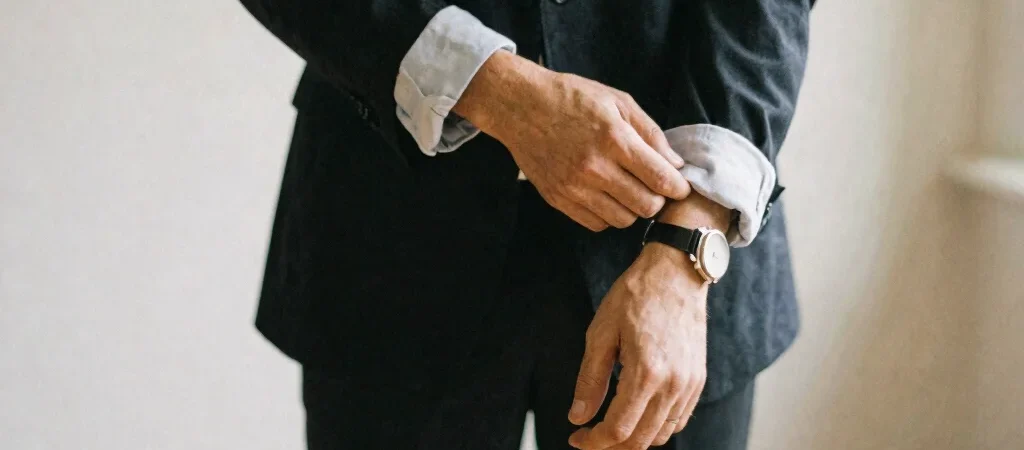
An outfit reference can be useful even when you don’t want to recreate the whole outfit. Maybe you noticed a sleeve pushed back over a watch, a shirt left untucked beneath a neat jacket, or the way a bag sits close to the body. Keeping track of that one detail makes a visual archive feel personal instead of endless.
Name What Caught You
Before saving a picture, give it a plain-language note: “rolled cuff with tailored jacket” or “soft bag against sharp coat.” That small description helps you remember why the look stayed with you. It also makes the image easier to find when you’re thinking about a specific piece of your own wardrobe.
Look Beyond the Full Look
Full-length framing is best for proportion, but a closer crop can reveal how fabric gathers or where a layer ends. When possible, keep both views together rather than choosing one as the definitive image. The larger composition gives context; the detail gives you something concrete to notice.
Build a File That Helps
Organize references by the question they answer, not only by garment or color. A folder for “sleeves and cuffs” might hold a crisp folded shirt cuff, a knit pushed above the wrist, and a jacket sleeve covering part of the hand. That kind of visual archive offers possibilities without turning personal style into a set of rules.